Lights Out, Gains In: Training After Dark Without Sacrificing Sleep
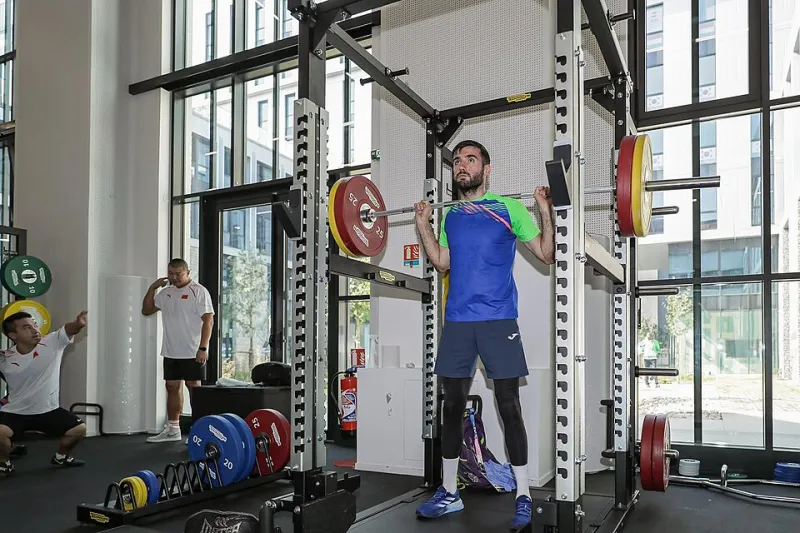
Photo: The National Paralympic Committee of Azerbaijan, CC BY-SA 4.0, via Wikimedia Commons
There is a particular kind of UK winter evening that every committed gym-goer knows. You leave work in darkness, queue for a squat rack at 7pm, and by the time you have trained, showered and eaten, it feels like bedtime should have happened an hour ago. The temptation is either to skip the session or to accept that you will be staring at the ceiling until midnight. Neither is necessary.
Evening training gets a bad reputation because it raises core temperature, adrenaline and mental arousal. That is real. But the evidence does not support the idea that late sessions automatically wreck sleep for everyone. In fact, many athletes sleep well after evening exercise when the surrounding routine is managed properly. The problem is usually not the training itself. It is the bright screens, the double espresso and the 10pm doomscroll that follow it.
What actually happens when you train late
Core temperature follows a daily rhythm and tends to peak in the late afternoon or early evening. That is one reason late-afternoon sessions can feel strong: muscles are warm, reaction time is decent and perceived effort is often lower. Hard training also increases blood flow and alertness, which can delay the wind-down process if you go straight from a heavy set of deadlifts to bed.
Melatonin, the hormone that helps signal darkness and sleep onset, is sensitive to light. Bright gym lighting, phone screens and kitchen spotlights can all suppress it. Caffeine is another factor: it has a half-life of roughly five to six hours, meaning a 5pm coffee still has a meaningful chunk of its stimulant effect at 10pm or 11pm. Put those together and you have a recipe for a late night, not because you lifted, but because your environment stayed switched on.
The three-step protocol for late sessions
The aim is not to make evening training feel like a clinical procedure. It is to remove the obvious friction points so your body can downshift after the session.
Step 1: Manage light like it is part of your programme
Treat light as a training variable. On the way home from the gym, avoid staring at a bright phone in a dark car or train. At home, use lamps rather than ceiling lights where possible and keep screens dim or use night mode. If you are genuinely sensitive to light, amber-tinted glasses in the last 90 minutes before bed are a cheap and practical experiment.
Your bedroom should be dark enough that you cannot read the cover of a book. That sounds basic, but plenty of athletes train hard and then undo the recovery by sleeping in a room with streetlight bleeding through the curtains. Blackout blinds or a decent eye mask are not luxuries if you are training late through a British winter.
Step 2: Set a caffeine cut-off and stick to it
If you train at 7pm, a strong coffee at 4pm is probably fine for most people. A pre-workout at 7pm is a different story. Work backwards from your target bedtime: if you want to be asleep by 11pm, aim to have your last meaningful caffeine hit by early afternoon. That includes tea, cola and the chocolate you eat after dinner without really thinking about it.
If you need a psychological boost before a late session, try a caffeine-free pre-workout or simply a small carbohydrate snack. The ritual matters more than the stimulant for many people. Save the strong coffee for morning sessions or competition days when the timing works in your favour.
Step 3: Time your cool-down, not just your workout
The final hard set should ideally finish 90 to 120 minutes before bed. That gap lets your nervous system come down. Use the tail end of the session for easy movement: a few minutes on the bike, some breathing work, light stretching. Then have a warm shower, get into comfortable clothes and keep the last hour low-key.
A cool bedroom helps because core temperature needs to drop for sleep onset. Do not make the mistake of a freezing cold shower immediately before bed unless you know it helps you personally. For most athletes, a warm shower followed by a cool, well-ventilated room is the more reliable route.
Build the routine around the session
Late training works best when it is not treated as an emergency. Pack your gym bag in the morning, plan a simple post-session meal, and decide in advance when the screens go off. A bowl of porridge with milk, a banana and a glass of water is a perfectly decent post-lift meal at 9pm. You do not need a gourmet recovery spread to sleep well.
If you are training after sunset three or four times a week, keep your wake-up time as consistent as possible. A stable morning alarm anchors your body clock and makes the evening wind-down easier. Chasing a perfect sleep score every night is a fast route to anxiety. Aim for a repeatable routine instead.
The dark-hour advantage is not about pretending winter evenings are ideal. It is about refusing to let a good session become a bad night. Train hard, manage the light, cut the caffeine and give yourself a proper landing strip before bed. Your sleep will thank you, and your next session will be better for it.