Three Pairs, One Set of Legs: A Runner’s Shoe Rotation That Respects Squat Day
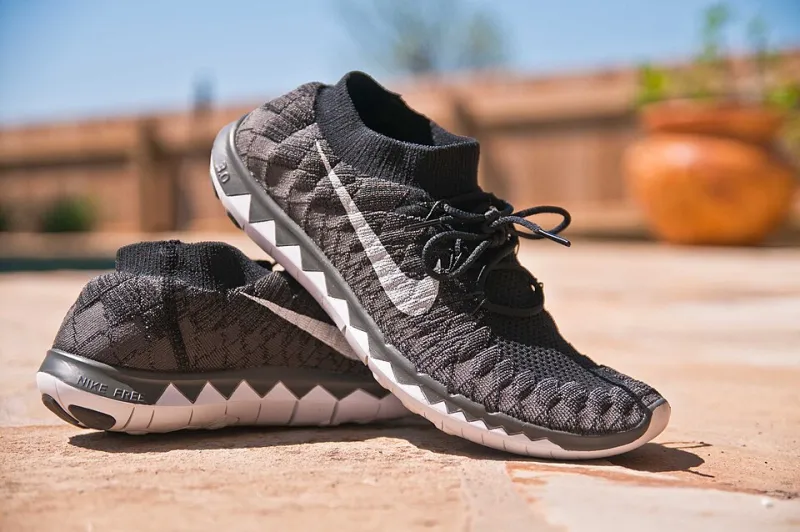
Photo: Mark Bonica from Durham, NH, USA, CC BY 2.0, via Wikimedia Commons
Most runners own one pair of shoes and one pair of legs. The shoes get worn into a sad, floppy shape. The legs get blamed for everything. Then Thursday’s squat session arrives and the same quads that felt fine on Tuesday feel like they have been filled with wet sand. That is not necessarily a shoe problem, but it is often a load-management problem wearing a shoe-shaped disguise.
Shoe rotation is not a magic injury-prevention switch. The evidence is not strong enough to say that rotating shoes stops runners getting hurt. What rotation can do is more modest and more useful: it changes the stimulus, gives a midsole a chance to recover between runs, and makes it easier to match the shoe to the job. For anyone who runs and squats, that last point matters. You are not just choosing a shoe for a run. You are choosing how much extra fatigue you are happy to carry into the gym.
The garage-simple principle
Do not build a rotation to collect kit. Build it to separate jobs. A sensible three-pair plan covers almost every UK runner who also lifts: a daily trainer, a tempo shoe and a wet-weather workhorse. That is it. You do not need a shoe for every pace, surface and mood. You need enough separation that your easy runs feel easy, your faster runs feel fast, and your grim November pavement runs do not turn into a skating contest.
The other principle is less exciting: shoes are consumables. They are not investment pieces. A running shoe is a foam and rubber tool that degrades with use, heat, sweat and time. Rotation slows the rate at which any single pair becomes your only pair, but it does not make them immortal.
Pair one: the daily trainer
This is the pair that absorbs most of your mileage. Easy runs, recovery plods, long steady efforts, the ten minutes before work when the only available route is a loop of wet residential streets. It should feel comfortable from the first mile, not require a breaking-in ceremony, and have enough cushioning for the majority of your running.
For a lifter, the daily trainer is the default. If you have a heavy lower-body session later, this is the pair to wear in the morning. It is not because a daily trainer protects your knees by magic. It is because it is the shoe you are most accustomed to, and familiarity is underrated when the rest of the week is already asking a lot of your legs.
Use it for roughly 70 to 80 per cent of your running. Keep a simple note in your phone: date bought, rough mileage. You do not need a spreadsheet with mood tracking. A line in the notes app will do.
Pair two: the tempo shoe
This is the lighter, snappier pair for sessions where you actually want to run with a bit of intent: tempo runs, interval sessions, parkrun if you are chasing a time, or a shorter run where the daily trainer feels like running in porridge. It does not need to be a carbon-plated race shoe. For most club runners and gym-goers, a lighter daily trainer or a tempo-specific shoe is plenty.
The rule with this pair is simple: do not make it your everyday shoe. Use it for faster work and maybe the odd shorter race. If you wear it for every easy run because it feels fun, you will wear it out quickly and lose the contrast that made it useful. Also, avoid debuting a new tempo shoe on the same day as heavy squats or deadlifts. New shoe plus heavy barbell plus tired legs is a needless variable.
Pair three: the wet-weather workhorse
UK running is often less about performance and more about grip, water and road camber. A wet-weather workhorse can be a grippier road shoe, a mild trail shoe, or simply a second daily trainer with a more textured outsole. It is the pair you reach for when the canal towpath is a mud bath, the park is soggy, or the pavement has that shiny, treacherous look after a cold drizzle.
This pair does not need to be fast. It needs to be dependable. If you run mostly on roads, do not buy a fell shoe and pretend you are on the fells. If you run on towpaths and gravel, a light trail shoe can be genuinely useful. The point is to have a sensible option that keeps you running when the British weather does what it does.
Rules for mileage, surface and retirement
First, assign shoes by session, not by mood. Daily trainer for easy miles. Tempo shoe for faster work. Wet-weather workhorse for poor conditions or rougher surfaces. That is the rotation.
Second, do not obsess over a universal mileage number. A common range for replacing daily trainers is somewhere around 300 to 500 miles, but it varies hugely with body weight, surface, gait and shoe construction. A lightweight tempo shoe will usually retire earlier than a beefy daily trainer. Use mileage as a prompt, not a commandment.
Third, retire on evidence. Look for compressed or creased midsoles, worn-outsole patches, tears in the upper, and that vague feeling that the shoe has gone flat. If a pair suddenly starts making your shins, knees or Achilles grumble on runs that used to feel fine, it is worth asking whether the shoe is past its best. Do not wait for a dramatic injury to retire a pair that has clearly had it.
Fourth, keep the gym separate. Lifting shoes are for lifting. Running shoes are for running. Do not squat in squishy runners, and do not run a tempo session in flat-soled lifting shoes. That is not rotation. That is just making life harder.
The squat-day test
Here is the practical check. If your easy runs are always in the same knackered pair, your faster runs are always in the same lightweight pair, and your wet runs are an afterthought, you do not have a rotation. You have a favourite pair and two hostages.
A good rotation should make the week feel more stable, not more complicated. The easy run stays easy. The tempo run feels different. The wet run is less stressful. And when you walk into the gym for squats, you are not wondering whether your shoes are quietly adding to the load.
Three pairs is enough. One set of legs is all you get. Treat the shoes as tools, rotate them by job, and retire them without sentiment.