The Midweek Bike Check: Finding Your Threshold Without Trashing Your Legs
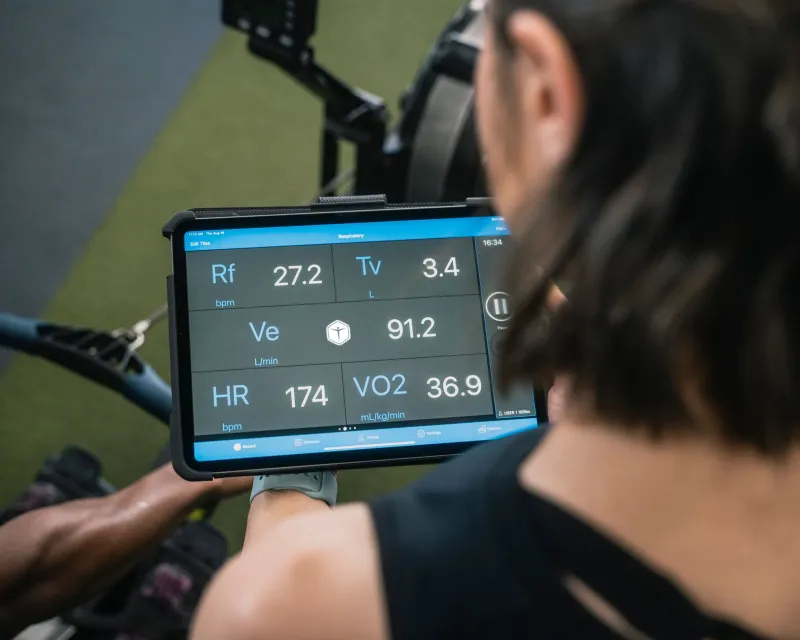
Threshold testing has a reputation problem. It sounds like a lab, a mask and a spreadsheet. In reality, most UK gym-goers can get a useful estimate from a stationary bike, a heart-rate strap and 20 honest minutes. The trick is not the test itself. It is where you put it in the week.
What the test is actually measuring
When cyclists talk about threshold, they usually mean the highest effort you can sustain for roughly 30 to 60 minutes before things fall apart. In a lab, that might involve blood lactate. In a gym, you can get close enough with a simple field test. You ride for 20 minutes at the hardest pace you can hold evenly, then use the average heart rate and power from that effort to set training zones.
It is not perfect. Heart rate lags behind effort, especially at the start of a hard bout. Gym bikes vary in calibration. Your legs may be tired from squats. But a well-run test is still more useful than guessing from a formula based on your age, or trusting a watch that has never seen you ride.
The protocol
Warm up for 10 minutes easy, then do three 1-minute builds with a minute of easy spinning between them. The builds should wake the legs up without making the test a race.
Start the 20-minute effort at an effort you think you can hold. That is usually around RPE 6 out of 10 for the first few minutes. Settle into RPE 7 to 8: hard, controlled, and repeatable. Do not sprint out of the gates. Do not save everything for a heroic final minute. The point is an even effort, not a Strava segment.
Record your average heart rate for the final 15 minutes, plus average power if the bike has it. Note your cadence and the bike setting. Cool down for 5 to 10 minutes. Use a fan, bring water, and use the same bike type if you can. Caffeine, heat and sleep all shift heart rate, so keep the conditions as normal as possible.
Turning the result into zones
If you have power, take 95% of your 20-minute average power as an estimate of functional threshold power. If you are using heart rate, use your average heart rate from the final 15 minutes as an estimate of lactate threshold heart rate. Then set rough zones from there.
| Zone | Heart rate | RPE | What it should feel like |
|---|---|---|---|
| 1 | Under 81% of threshold | 2-3 | Easy spinning, conversation no problem |
| 2 | 81-89% | 4-5 | Steady, conversational, sustainable |
| 3 | 90-93% | 6 | Controlled discomfort, short sentences |
| 4 | 94-99% | 7-8 | Hard, focused, breathing deep |
| 5 | 100%+ | 9 | Short bursts only |
Treat these as starting points, not commandments. A zone is a neighbourhood, not a postcode. If zone 4 feels like a gentle tempo ride, your test may have been low. If zone 2 feels like a race, your test may have been high, or you may just be tired.
Smartwatch estimates: useful, not gospel
Wrist-based optical heart rate is convenient, but it can lag during hard efforts and struggle with cold hands or a loose strap. A chest strap is usually more reliable for a test. Watch-based threshold estimates, VO2 max numbers and recovery scores are models, not measurements. They can be useful context, but they should not overrule a well-run test and your own RPE.
Compare the two. If your watch estimate is within a few beats of your test result, great. If there is a big gap, do not average two numbers and pretend that solves it. Check the basics: was the strap tight, was the bike calibrated, were you recovered, did you go out too hard? If the test felt honest and the data looks sensible, trust the test. If not, retest in a few weeks.
Fitting it into a strength-and-conditioning week
The simplest rule: keep the test at least 48 hours away from your hardest lower-body session. Do not test the day before squats or a key interval session. If you are in a heavy strength block, put the test in a deload week or at the end of a recovery week.
A workable week might look like this: Monday upper-body strength, Tuesday easy spin and mobility, Wednesday bike test, Thursday easy upper-body or recovery work, Friday lower-body strength, Saturday easy aerobic work, Sunday off. If your key session is a Saturday ride, test on Tuesday or Wednesday instead. The test is a calibration session, not a competition. It should leave you tired but not wrecked.
Retest every 6 to 10 weeks, not every week. If sleep has been poor, work has been chaotic, or you are carrying a niggle, postpone it. A bad test day tells you more about your week than your fitness.
Common mistakes
Going out too hard is the big one. The first five minutes should feel almost too easy. Chasing a number is another. Your threshold is not a personality score. Comparing yourself with the person on the next bike is pointless. And forgetting the fan is a classic: overheating pushes heart rate up and makes the result look worse than your fitness.
Bottom line
A 20-minute gym-bike test is a practical calibration tool for UK athletes who want useful zones without a lab. Use RPE, heart rate and power if you have it. Compare the result with your smartwatch, but do not worship it. Put the test where it will not compromise your key sessions, then get back to training.