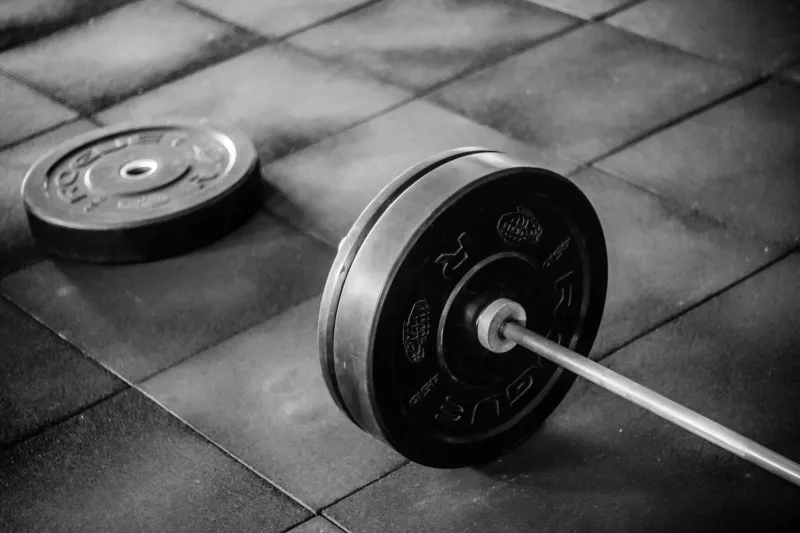
The Invisible Spotter: Put Winter Gym Air on Your Training Plan

Photo by Photo by Vitaly Gariev on Unsplash on Unsplash
Most lifters audit their programme with the enthusiasm of an accountant. Sets, reps, RPE, sleep, protein, step count. All logged. All scrutinised. Then they walk into a gym in January, shut every window because it is 4°C outside, and wonder why the same squat session feels like a different sport by the third work set.
The missing column is air. Not in a woo-woo, ionised-oxygen kind of way. In a plain, measurable, open-a-window kind of way. Indoor air quality is a training variable, and winter is when it tends to fall off the cliff.
Why air belongs next to load and sleep
A stuffy gym does not automatically wreck your strength. The evidence is not that dramatic. But poor ventilation can nudge perceived effort upwards, dull focus and leave you feeling flat before the session has really started. In a cold-weather gym, that is a silly bit of friction to accept.
Carbon dioxide is a useful proxy here. Humans exhale it. In a crowded, sealed room, CO2 builds up. A rising reading tells you the room is not clearing stale air efficiently, even if it feels warm and cosy. It is not a direct measure of performance, and it is not a virus detector. It is a cheap ventilation smoke alarm.
UK gyms are especially prone to this. Plenty sit in converted retail units, railway arches or old industrial buildings with heating systems that are better at warming air than moving it. Home gyms are worse. A garage with the door down and a fan pointed at your face is not ventilated just because you can feel a breeze.
The budget monitor test
You do not need a building survey. A basic CO2 monitor with a display is enough to spot the pattern. Place it at breathing height, away from a window, door or radiator. Take an outdoor baseline first. Fresh air is usually around 400 to 450 ppm. Then run your normal session.
For a home gym, keep the room set up as you normally would and record the reading every ten minutes. For a commercial gym, do the same on a typical evening. Note the peak, how quickly it falls when doors open, and how you felt at the time. Add a simple RPE note next to it. That is the whole test.
As a rough guide, under 800 ppm suggests decent ventilation. Between 800 and 1,000 ppm is worth watching. Over 1,000 ppm in a busy training space is a prompt to improve airflow. Above 1,500 ppm, stop pretending the room is fine. These are practical thresholds, not lab-grade diagnoses. The trend matters more than one number.
Fix the room before you fix the programme
Ventilation first. Open a window or external door a crack, even in winter. Use fans to mix air rather than just blast your face. Keep vents and extractors clear. In a garage gym, run the extractor or leave the side door open between sets. If you use an air purifier, treat it as a filter, not a substitute for fresh air.
Heating is the other lever. A gym does not need to be tropical. Drop the thermostat a degree or two, wear a long-sleeve top for the warm-up and let the room breathe. Cold air is not the enemy. Stale, damp, condensation-on-the-windows air is the thing to sort out.
In a commercial gym, you can only control so much. Train off-peak if the evening crowd turns the place into a sauna. Use the quietest corner near a door. Mention persistent stuffiness to staff. If the windows are sealed and the vents are painted shut, that is a maintenance issue, not a personality flaw.
A practical winter air routine
Before you train, open the room for five minutes and let it reset. Set your monitor where you will actually be breathing. During the session, keep a door or window cracked and use a fan to move air around. Rest near the fresher side of the room, not in the dead corner by the radiator. After you finish, air the place out again before you shower or log the session.
Once a week, review the numbers alongside your training notes. If the air was poor on a day when everything felt heavy, you have a useful clue. It does not explain every bad session. It just removes one invisible excuse from the pile.
No monitor? Use your senses as a rough guide. Condensation on the windows, a warm stale smell, a room that feels airless by the second block, or a headache that appears only in one gym are all prompts to improve airflow. Do not wait for a perfect dataset.
Keep it in proportion
Air quality is one variable among many. It will not replace progressive overload, sleep or a sensible deload. It will not make a bad programme good. But in a British winter, when every window is shut and every heater is on, it is a cheap, practical thing to check. Treat the room as part of the session. Your lungs are already doing the work.